Silhouettes of People Playing Puzzles: Graphics & Illustrations
As a brand designer currently auditing visual assets for an upcoming educational product launch, I approached the Silhouettes of People Playing Puzzles collection with a critical eye. In modern content marketing, finding graphics that balance playfulness with professional clarity is a persistent challenge. My first impression of this graphic design asset was one of versatile neutrality. Unlike detailed illustrations that dictate a specific art style or era, these silhouettes offer a timeless quality. The mood is immediately collaborative and cognitive, suggesting problem-solving, connection, and mental engagement without relying on facial expressions or specific demographics. This universality makes the collection particularly valuable for brands targeting diverse audiences across age groups, from early childhood education to adult cognitive therapy or family game nights.
Evaluating Visual Tone for Educational Branding
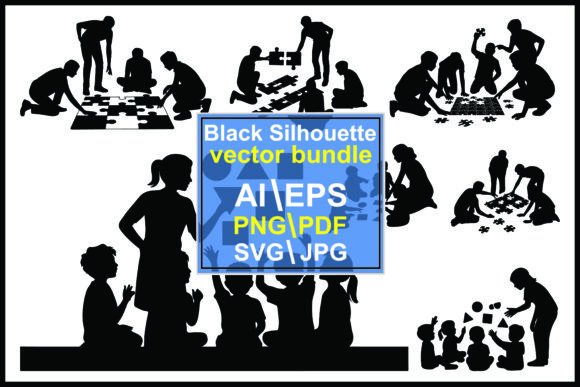
When integrating this collection into a real campaign workflow, specifically for a small business launching a new STEM learning kit, the emotional tone proved essential. The silhouettes of people, children, and adults interacting with jigsaw pieces and geometric shapes communicate "active learning" rather than passive consumption. For marketers, this distinction is vital. The visuals do not look like generic stock clipart; they feel like intentional editorial design elements. The inclusion of distinct shapes—circles, triangles, and squares—alongside human figures creates a natural visual hierarchy. This allows the graphic design asset to serve as more than mere decoration; it becomes a functional part of the storytelling, reinforcing the brand’s core message of structured play and intellectual growth. The clean lines ensure the asset feels suitable for both casual social media graphics and premium packaging design, bridging the gap between handmade charm and commercial polish.
Practical Applications Across Marketing Channels
In testing these illustrations across various touchpoints, their adaptability stood out. For social media graphics, particularly Instagram carousels and Pinterest pins, the silhouettes provided excellent negative space for overlaying text. Because the figures are solid forms, they create high-contrast anchors that guide the viewer's eye toward headlines and calls to action. In web design, I found them effective as section dividers or hero image accents that break up dense copy without adding visual noise. For physical products, such as product labels and packaging inserts, the vector-friendly nature of the SVG design ensures crisp printing at any scale. Digital sellers and online coaches can also leverage these assets in Canva templates or lead magnets, where consistent visual branding is key to building audience trust. The ability to use the same motif across digital ads, email banners, and printable design materials creates a cohesive brand identity that feels professionally curated.
Strategic Placement for Maximum Engagement
To maximize the impact of Silhouettes of People Playing Puzzles, strategic placement is non-negotiable. These graphics perform best when they support the primary message rather than compete with it. In my review, I identified several high-value applications:
- Hero Graphics and Campaign Headers: Use the larger group compositions to establish the theme of collaboration and problem-solving immediately above the fold.
- Branded Templates: Incorporate individual puzzle piece silhouettes as recurring decorative elements in slide decks and social media frames to reinforce recognition.
- Packaging Accents: Utilize the geometric shape interactions on box sleeves or bags to signal the product category visually before the customer reads the text.
- Editorial Layouts: Pair the silhouettes with blog content about child development or team building to break up text and maintain reader engagement.
- Digital Product Visuals: Feature the assets in mockups for e-books or courses to demonstrate value and set expectations for the content inside.
These placements leverage the asset's strength in conveying activity and structure, directly supporting marketing goals like stronger first impressions and clearer visual communication.
Navigating Limitations and Contextual Risks
Despite their versatility, brand owners must exercise caution. Silhouettes rely entirely on outline and form, meaning they can fail if contrast is insufficient. I advise against using these graphics on busy photographic backgrounds or low-contrast color fields where the edges might blur. In formal corporate branding or luxury sectors unrelated to education or leisure, the playful nature of the jigsaw and shape motifs may undermine the desired tone of exclusivity or seriousness. Additionally, in small mobile graphics or dense information layouts, intricate details of fingers holding puzzle pieces can become muddy. Always prioritize readability over decoration. If the asset competes with your main headline or obscures essential product photography, it detracts from the user experience. Professional branding requires knowing when not to use a design element as much as knowing when to use it.
Designer Notes: Technical Checks and Licensing
Before deploying Silhouettes of People Playing Puzzles in a paid campaign or client project, run through this practical checklist to ensure professional results:
- Palette Integration: Test the silhouettes in your exact brand colors. While black is standard, adapting the fill color to match your secondary brand palette can make the asset feel bespoke rather than borrowed.
- Typography Pairing: Assess how the organic curves of the human silhouettes interact with your fonts. They pair exceptionally well with rounded sans-serif or friendly script fonts but may clash with rigid, industrial display typefaces.
- Mobile Preview: Always preview the graphics on a phone screen. Ensure the interaction between the person and the puzzle piece remains legible at thumbnail size.
- Competitor Audit: Compare your usage against competitors in the creative marketplace. If everyone uses black silhouettes on white, consider an inverted color scheme or a duotone treatment to differentiate your visual content.
- Licensing Verification: Confirm the commercial license terms. If you are creating a design bundle or Canva template for resale, ensure the original asset license permits derivative commercial use to avoid legal pitfalls.
- Balance and Spacing: Treat the silhouette as a typographic element. Give it breathing room. Crowding the graphic against text blocks reduces its elegance and impacts the overall modern design aesthetic.
By treating this collection as a strategic component of your visual language rather than just filler clipart, you elevate the perceived value of your offerings. Whether you are designing for a local tutoring center or a global ed-tech platform, the right application of these graphics fosters an immediate, intuitive connection with your audience. Ultimately, successful content marketing relies on assets that communicate complex ideas simply. Silhouettes of People Playing Puzzles achieves this by stripping away the unnecessary, leaving only the universal essence of learning, connection, and play. When used with intention and technical precision, this graphic design asset becomes a powerful tool for building memorable, trustworthy, and visually consistent brand experiences.